
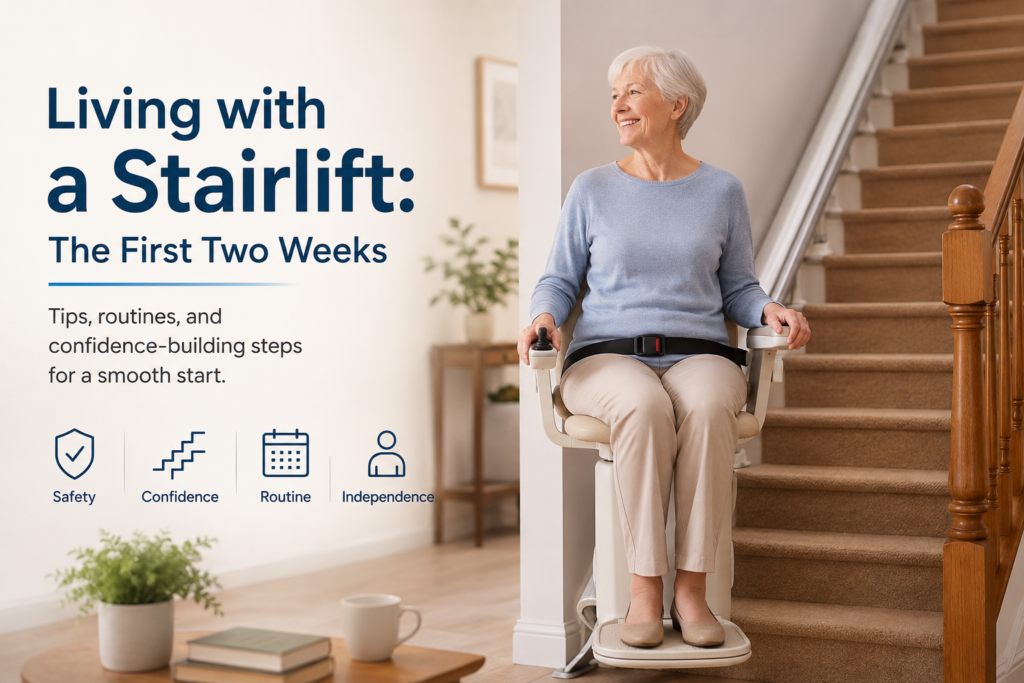
However, like any new piece of equipment, a stairlift may take a little time to get used to. The first two weeks are usually an adjustment period in which the user becomes familiar with the controls, seating position, safety features, and daily routine.
The First Few Days
During the first few days, using the stairlift may feel unfamiliar. The movement can seem slower than expected, and getting on and off the seat may require some concentration.
Before each journey, make sure the seat is in the correct position and the armrests and footrest are fully open. Sit comfortably with your back against the seat, place your feet securely on the footrest, and fasten the safety belt before operating the lift.
Most stairlifts use a simple control located on the armrest. Depending on the model, this may be a joystick, button, or switch. Keep the control pressed in the direction you want to travel. The stairlift will stop automatically when you release it.
There is no need to rush. Taking a few extra seconds to position yourself correctly will help you feel more secure.
Becoming Comfortable with the Movement
A stairlift is designed to move smoothly and steadily. Some users initially feel slightly nervous when the lift starts, stops, or travels around a curved section of the staircase.
This feeling usually becomes less noticeable after several journeys. Looking forward rather than down at the stairs can help you feel more relaxed. Keeping both hands on the armrests may also provide additional reassurance.
Within the first week, most users begin to understand how the stairlift moves and where it slows down or stops.
Creating a Daily Routine
Using the stairlift regularly is one of the best ways to build confidence. Try to follow the same steps each time:
- Check that the stairway is clear.
- Lower the seat, armrests, and footrest.
- Sit fully back in the seat.
- Fasten the safety belt.
- Operate the control until the lift reaches the landing.
- Swivel the seat, where applicable, before standing up.
Following the same routine makes the process easier to remember and reduces the risk of missing an important safety step.
Using the Swivel Seat Safely
Many stairlifts include a swivel seat that turns away from the staircase at the top landing. This allows the user to stand up while facing the landing rather than the open stairs.
During the first two weeks, take time to practise this feature carefully. Make sure the seat locks securely into position before standing. Use the armrests for support and avoid twisting your body while getting off.
If the swivel mechanism feels difficult to use, contact the installer rather than trying to force it.
Keeping the Staircase Clear
Although stairlifts include safety sensors, the staircase should always remain free from shoes, bags, toys, cables, and other objects.
The sensors are designed to stop the lift if an obstruction is detected. While this is an important safety feature, keeping the stairs clear helps prevent unnecessary stops and protects the equipment from damage.
Family members and visitors should also be reminded not to leave anything on the stairs or stairlift rail.
Charging and Parking the Stairlift
Most modern stairlifts run on rechargeable batteries. These batteries usually charge automatically when the lift is parked at its designated charging point.
Make sure the stairlift is left in the correct position after use. If it is not parked properly, it may begin to beep or display a warning light.
The installer should explain the charging position during the handover. If the stairlift continues to make an unusual sound, check the user manual or contact the service provider.
What Is Normal During the Adjustment Period?
During the first two weeks, it is normal to:
- Take longer to sit down and stand up
- Feel cautious during the journey
- Forget to fold the seat or footrest
- Need help understanding the controls
- Ask a family member to remain nearby
- Refer to the user manual several times
Confidence usually improves with regular use. Avoid comparing your progress with someone else, as every user adjusts at a different pace.
When to Contact the Installer
A stairlift should operate quietly, smoothly, and consistently. Contact the installer if you notice:
- Unusual grinding, clicking, or scraping noises
- Sudden or repeated stopping
- Warning lights or continuous beeping
- Difficulty fastening the safety belt
- A loose seat, armrest, or footrest
- Problems with the swivel seat
- The lift failing to charge or start
Do not attempt to repair or adjust the stairlift yourself. Professional inspection is the safest way to resolve technical problems.
Feeling More Independent
By the end of the second week, many users find that operating the stairlift has become part of their normal routine. Journeys between floors feel more predictable, and the controls become easier to use without assistance.
A stairlift is not only a mobility aid. It can restore access to bedrooms, bathrooms, and other areas of the home that may previously have felt difficult or unsafe to reach.
With patience, regular use, and proper guidance, the first two weeks can become the beginning of a safer and more independent daily life.
Final Thoughts
Adjusting to a stairlift does not need to happen immediately. Take your time, follow the safety instructions, and practise each step until you feel comfortable.
If you have questions about operating your stairlift or notice anything unusual, contact your installer or maintenance provider. Proper support during the first few weeks can help ensure that the stairlift remains safe, reliable, and easy to use for years to come.